Welcome
Burlington County Soil Conservation District (BCSCD) strives to educate and assist the public in achieving a higher responsibility to protect our natural resources. In cooperation with state and federal agencies, the BCSCD helps to ensure proper soil health and water quality by using various management tools. Whether you are a a farmer, developer, teacher, or an environmentally minded citizen, the BCSCD offers a variety of services, assistance and information for Burlington County residents.
"Out of the long list of nature’s gifts...none is perhaps so utterly essential to human life as soil." Hugh Hammond Bennett - 1935
Chapter 251 NewsThe seventh edition of the Standards for Soil Erosion and Sediment Control in New Jersey is now available for download at no cost. These Standards were adopted January 2014 and include additional guidance for assessing downstream stability, rip rap design, the use of infiltration and additional vegetative options for use in the Pinelands National Reserve.
Erosion & Sediment Control Inspection BasicsKey Resources:Our Mission is to Help You Protect Our Natural ResourcesMany people often do not realize how important it is to conserve our soil. If we do not ensure the proper management of soil on construction sites, agricultural lands, or on our personal property, the loss of vital topsoil can affect the uses of the land and the water that we rely on every day.
It is everyone's responsibility to protect our natural resources. The future of our environment lies in our hands. It is for this reason, the Burlington County Soil Conservation District strives to educate and assist the public in achieving this goal. The Importance of Soil & Water ConservationThe importance of soil and water conservation became evident over 80 years ago when the Dust Bowl created havoc upon American land. The soil was dry from drought, and was overworked and unprotected from wind and rain. It affected the American farmers capacity to work the land since vital topsoil was stripped from the land, and sediment that found its way into the water supply diminished water quality. Soon after, President Franklin D. Roosevelt signed the Soil Conservation Act of 1935, thus giving birth to soil conservation districts across the nation.
The Camburton County Soil Conservation District, which served Camden, Ocean, and Burlington Counties had grown so large that by 1952, each county established separate districts and the Burlington County Soil Conservation District was created. Originally, the conservation efforts of the District involved erosion control assistance to farmers. In 1975, the New Jersey Soil Erosion and Sediment Control Act was passed which required developers to follow a District approved sediment control plan to almost every type of non-agricultural land disturbance covering more than 5,000 square feet. Why is it Important to Prevent Soil Erosion?Erosion is the process which moves soil from one location to another by wind, water, or other natural action. It is a natural process until accelerated by our actions. Large open areas such as agricultural fields and construction sites are easy prey to the forces of wind and water erosion. When open areas remain unprotected from these forces of nature, the land becomes stripped of vital topsoil which is used to grow corps, trees, grasses, etc. Allowing the erosion of this topsoil would create the same conditions that existed prior to the Dust Bowl in the 1930's.
Did you ever wonder where the soil that erodes from these open areas goes? It leaves these areas and goes into our streets which cause traffic hazards. After a rainstorm, the sediment then washes into storm drains and travels into our streams and waterways. This sedimentation of our streams causes flooding, reduces water quality, and affects the fish and wildlife that utilize them. It often raises the price of food. Additionally, this sedimentation affects the recreational uses of these waterways and increases the need to dredge them. Soil is an amazing substance. It is a complex mix of ingredients: minerals, air, water and organic matter - the countless micro-organisms and decaying remains of once living things. Soil is made of life and soil makes life.
|
Education Corner:2024 Annual Poster Contest: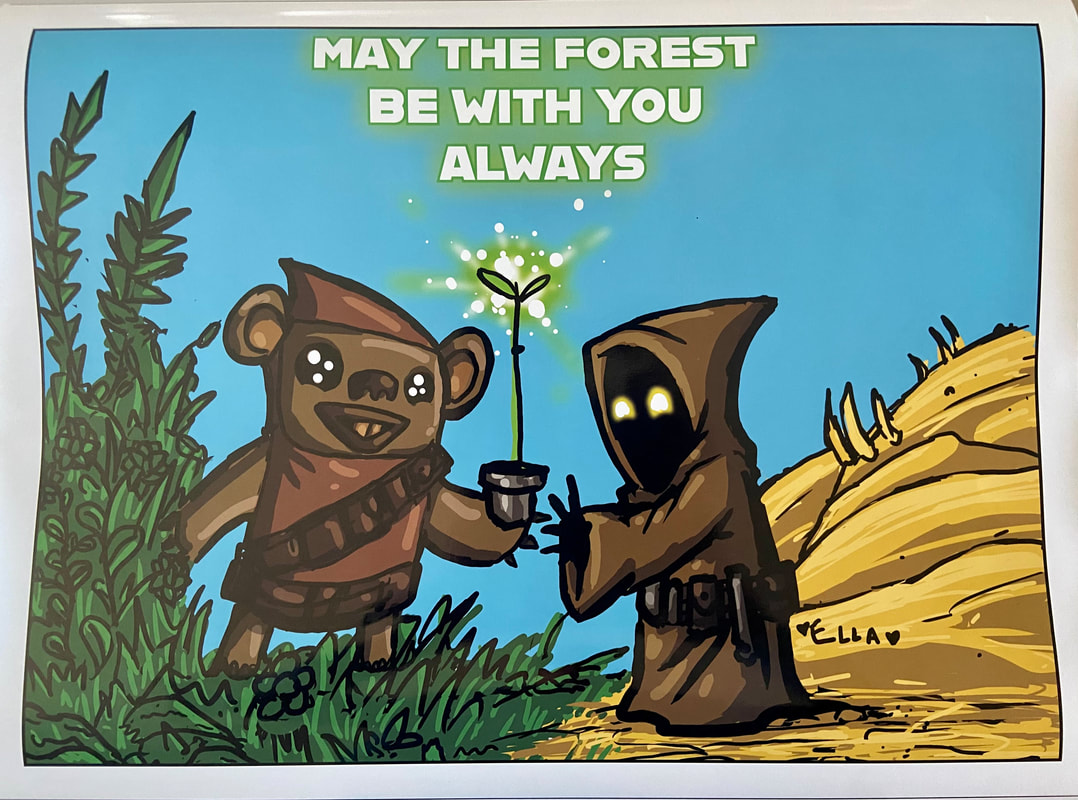
2024 Grand Champion!Congratulations to Ella Vassallo for winning third place in the New Jersey Poster Contest in the 4 - 6 grade category! Her creativity and talent shine through in this remarkable achievement.
The 2023 New Jersey Envirothon:"Adapting to a Changing Climate"BSCD Grant Involvement:NFWF Grant - Cover CropFloating Islands
|